Diving and Snorkelling in Malta and Gozo
Diving and snorkelling in Malta and Gozo: Ċirkewwa wrecks, Gozo shore sites by level, snorkel trails, dive prices and DAN's 12 and 18 hour flying advice.
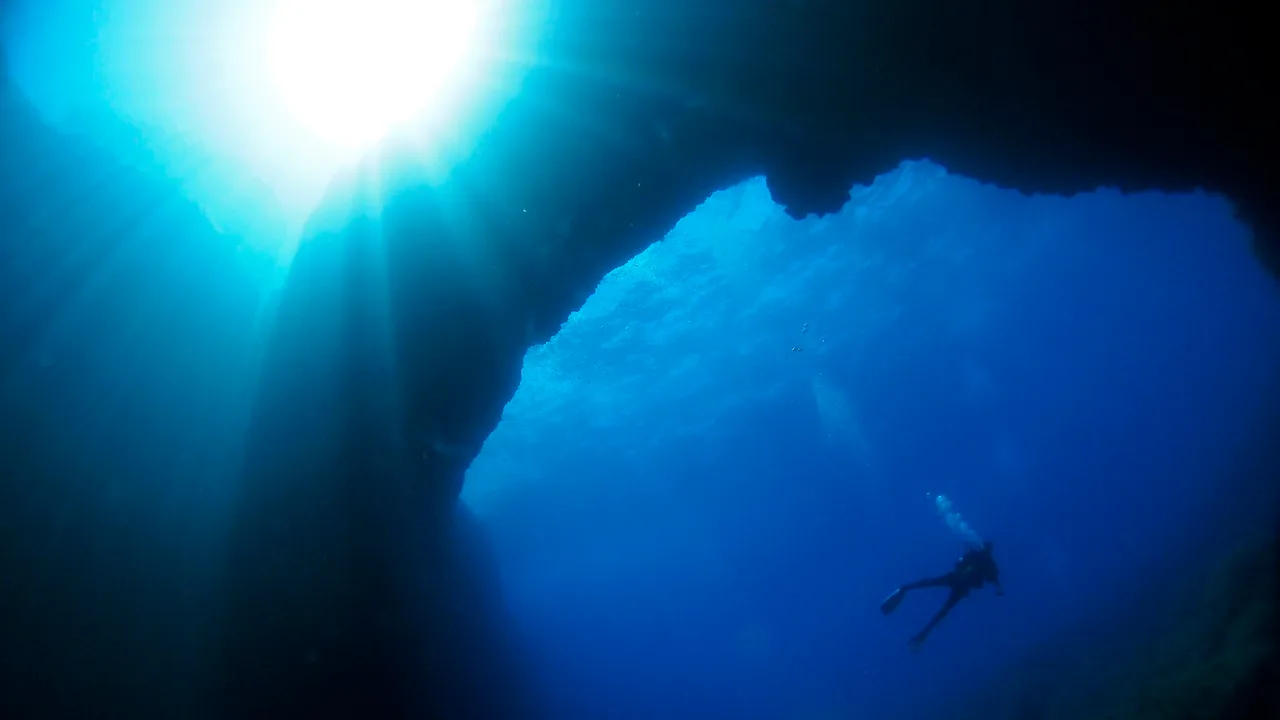
Shore diving in Gozo isn’t automatically the easy option. The Visit Gozo diving guide marks the Blue Hole at Dwejra and the Inland Sea as advanced dives, with a rough, sharp-edged limestone approach at the Blue Hole, and puts Ħondoq Bay down as a beginner site. On Malta itself the headline is Ċirkewwa, where the tugboat Rozi lies upright on the sand at a maximum depth of 36 metres. If you’d rather watch marine life from the surface, Ambjent Malta’s official snorkel trails at Golden Bay and Għajn Tuffieħa come with digital guides in English and Maltese.
A surface swim, a lesson or a certified dive?
Snorkelling keeps the focus on what you can see at the surface. Pick a place where you can enter and leave the water comfortably, and be honest about your swimming ability and the conditions, especially if you’re introducing someone else to it.
For scuba, an introductory session, a qualification course and a guided dive for someone already certified are three different bookings. Even the two introductory sessions differ: at Scuba Dive Malta, Try Scuba stays in Mellieħa Bay at no more than 5 metres, while Discover Scuba Diving goes to 12 metres at Ċirkewwa. If someone in your group wants to stay on land, agree where they’ll wait and how you’ll meet afterwards.
Golden Bay and Għajn Tuffieħa: the snorkel trails
Ambjent Malta promotes official snorkel trails at Ir-Ramla tal-Mixquqa, also known as Golden Bay, and Għajn Tuffieħa, also called Riviera Bay; our beach guide covers both bays above the waterline. The digital guides are written to help visitors understand the marine habitats and species along the coast, so read the guide before you go in and pick the stretch that suits the sea that day. Turn back while you’re still comfortable.
The existence of a trail says nothing about the day’s conditions. At the beaches it supervises, Malta Red Cross assesses the sea and sets the safety flags accordingly, so the flag on the sand decides the swim, whatever the forecast said. Visit Malta puts the peak beach season at up to mid- to late October, and our before-you-go guide sets out what the other months suit.
Ċirkewwa and the wrecks
Visit Malta lists more than 120 dive sites within minutes of each other and puts visibility at around 30 metres. Ċirkewwa, at the northern tip, is where you’ll hear the names first. At Marfa Point, an old metal jetty marks the line out to the tugboat Rozi, which Visit Malta describes as a 40-metre tug sunk deliberately in 1991, sitting upright and intact apart from its engines and propeller, with a maximum depth of 36 metres. Its Marfa Point shore dive starts from a shallow lagoon, with a reef that drops to about 18 metres, and its listing for Ċirkewwa itself describes a drop-off from 8 to 30 metres.
The patrol boat P29 lies off Ċirkewwa too, and Visit Malta’s list of seven wreck conservation areas names the Rozi and P29 together, along with the Um El Faroud off Wied iż-Żurrieq. The Um El Faroud is a 115-metre, 10,000-ton ship sunk in 1998. Visit Malta gives 18 metres to the top of the bridge, 25 metres to the main deck and 36 metres as the maximum depth, and says the wreck can be entered fairly easily but that, because of its size, only divers with advanced wreck training should go in.
Visit Malta’s diving page adds two rules for visiting divers: divers complete a medical statement form indicating fitness to dive, and a diver who wants to dive without a centre’s guide needs a buddy and a PADI Advanced Open Water certificate or an equivalent from another agency.
Licensed centres, paperwork and prices
Malta Tourism Authority licenses dive services including training, guided diving and equipment hire. Scuba Dive Malta’s price list shows how the costs stack up, and what you’re paying for. On its price page on 17 November 2026, a Try Scuba session in Mellieħa Bay cost €80, a Discover Scuba Diving experience at Ċirkewwa €110 (minimum age 10), or €185 with an extra dive. For certified divers, two guided shore dives in one day cost €115 with full equipment, four dives over two days €230, and ten over five days €525. Bringing your own gear takes €15 off each day, and a trip to Comino adds €35 for two boat dives, available April to October. The SSI Snorkel Diver course, with equipment, is €35 for 1.5 hours. The guided dives run Monday to Saturday, two dives in the morning, meeting at the dive shop at 08:00 and finishing around 12:30.
Watercolours Dive Centre’s conditions, checked on 16 November 2026, show what a centre may ask of you. Qualified guests present a certification card and logbook, the centre may require a check or refresher dive depending on experience and time since the last dive, and its medical process includes a self-assessment form and a doctor’s certificate when an answer requires medical clearance. It says it chooses sites according to the guest’s qualification, proficiency and sea conditions and that plans may change at short notice. Send the centre your experience before booking so that missing paperwork doesn’t eat into the holiday.
Before you pay, get the equipment, transport, boat supplements, meeting place and cancellation conditions in writing, and what happens if the site changes. If you’ve been out of the water for a while, say so and book a refresher; it’s quicker to sort out now than on the jetty. Our Malta diving-insurance checklist covers what to check about rescue and treatment.
Gozo’s shore sites, from beginner to advanced
The Blue Hole is entered over that sharp-edged limestone, and the Inland Sea is a tunnel of about 80 metres leading to open water; both are advanced. Cathedral Cave at Għasri Valley is advanced on Visit Gozo’s scale with an average depth of 6 metres and a maximum of 14, which shows that the level reflects the entry and the sea as much as the depth. Visit Malta’s own listing for the same site calls it ideal for all levels, so ask the centre which description fits the day’s conditions.
Visit Gozo describes Ħondoq Bay as a beginner training setting and Xwejni as an inlet used for training. Explain any difficulty with carrying equipment, uneven ground or entering from rocks while you’re arranging the session, because the centre can’t fix it at the water’s edge. If diving is the reason for going, staying on the island lets the centre pick the day’s site, and our Gozo guide covers where to base yourself.
Xlendi’s underwater archaeological park
Heritage Malta’s Xlendi Underwater Archaeological Park is a deep-water site accessed through registered dive centres and clubs; Heritage Malta lists its maximum depth as 105 metres. That’s far below the 36-metre maximum of the wreck dives above, so treat it as a goal for a later trip with the training, not an add-on to this one. When a trip description mentions caves, wrecks or swim-throughs, ask the operator to explain the route and the skills it needs.
Flying after diving: 12 or 18 hours
For divers without symptoms after recreational no-decompression dives, DAN recommends a minimum pre-flight surface interval of 12 hours after a single dive, and 18 hours after multiple dives in a day or diving over multiple days. Its guidance calls for substantially longer intervals after dives involving compulsory decompression or certain technical exposures. Discuss the interval for your own programme with the centre before booking. A suggested minimum is not a guarantee of safety.
If you feel unwell after diving, see a doctor before you fly, not after. For a mixed holiday, put the water sessions early and keep the last days for Valletta or St John’s Co-Cathedral. Our route combining Malta and Gozo gives the land itinerary, and it works with the final day clear of scuba.
Photos
Read also

Things to do · 7 min read
Best Beaches in Malta and Gozo: Sand or Rocky Shores?
Verified · 17 November 2026Malta and Gozo beaches by sand, rock and how you get in: Golden Bay, Għajn Tuffieħa, Mellieħa, Ramla, Ħondoq, Sliema rocks and the Blue Lagoon.

Car hire · 7 min read
Car Hire in Malta: Driving on the Left, Licences and Gozo
Updated · 17 November 2026Car hire in Malta: driving on the left, which licences work, airport desks, Valletta charge zone and the €15.70 Gozo ferry fare, checked 16 November 2026.

What to see · 6 min read
Ġgantija Temples: Tickets, Hours and Reading the Stones
Verified · 17 November 2026Ġgantija in Xagħra: €10 combo ticket with Ta' Kola, opening hours, painted plaster, two kinds of limestone, access and how to get there.

Regions · 9 min read
Gozo from Malta: Ferries, Base or Day Trip, Where to Go
Updated · 17 November 2026Gozo for visitors from abroad: Gozo Channel fares and how the ticket works, the fast ferry from Valletta, a base or a day trip, and what to see.